The recurring question is: can someone else inspect, reuse, extend or challenge the analysis after the paper appears?
At Curtin, software sits inside an applied analytics mission
CBADA Focus
Biometry, statistics, bioinformatics and genetics, spatial analytics and modelling.
AAGI Mission
Use data analytics in grains RD&E to help Australian grain growers be more profitable and globally competitive.
Research Translation
Researcher-facing analytics and grower-facing systems both depend on reusable software.
The AAGI stack: an internal distro for agricultural analytics
Like a Linux distro bundles tools around a coherent purpose, AAGI’s software stack standardises how data moves from paddock to report across every project.
{rippo} IPPO register preparation
{AAGIThemes}, {AAGIPalettes}, AAGIQuarto Consistent graphics, tables and reports
{nert}, {fifo} Data retrieval and extraction
Shared components. Replaceable parts. Maintained by the team, not one person.
Reproducible on-farm experimentation is a software workflow
R scripts, spatial features, package-based workflows and repeatable setup
Linear mixed models, pseudo-environments and geographically weighted regression
Tables, maps, diagnostics and templates for independent analysis
The method is no longer just “what model did we fit?”
It is “can the whole analytical process be repeated and maintained?”
The stack is polyglot by necessity
Whole Farm Liming Decisions
Monte Carlo model using real farm data for investment decisions
Architecture
Julia interfaces with a .NET API based on an existing decision-support app
Infrastructure
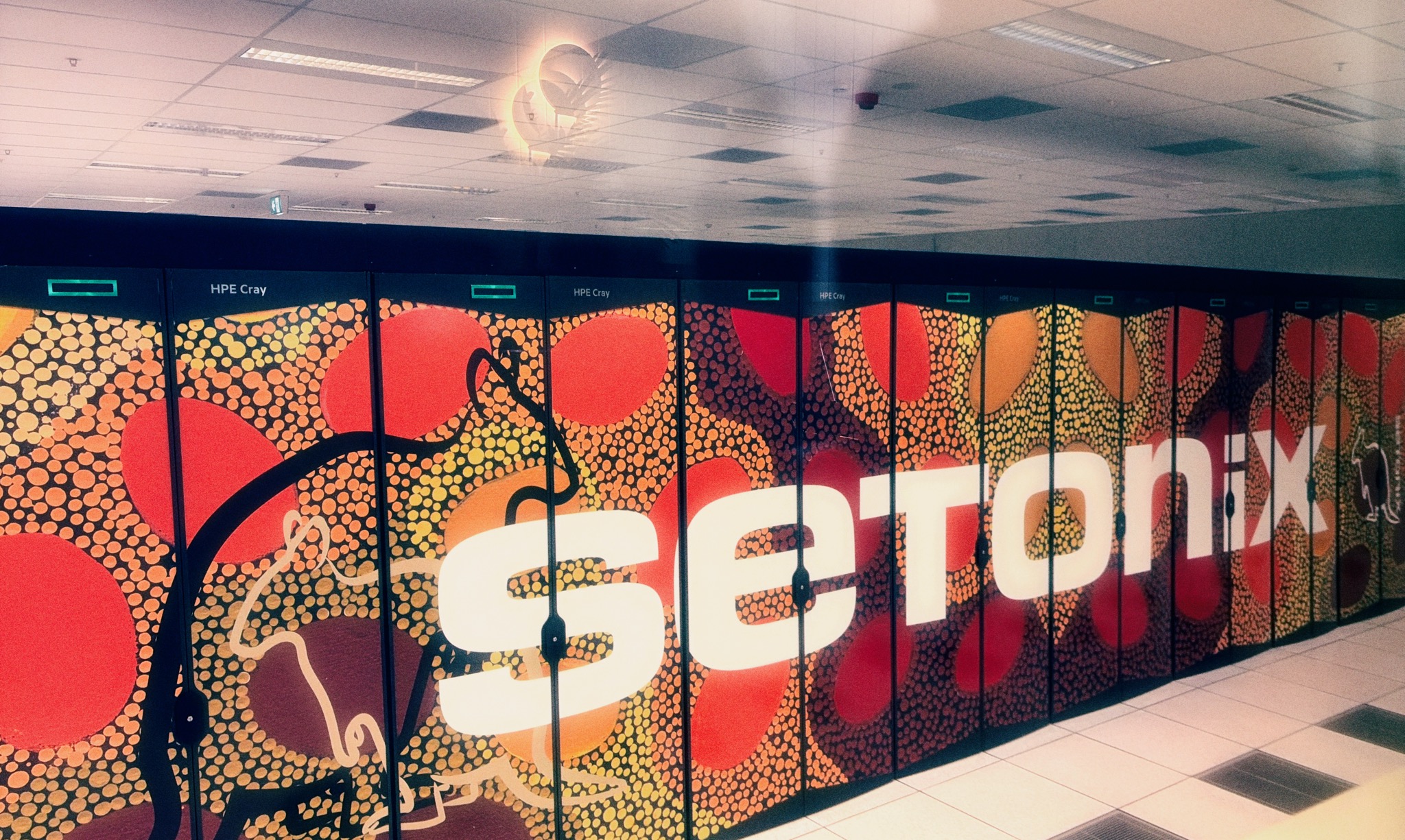
Docker, cloud-hosted workflows and Pawsey/Nimbus context
That’s where I came from.
Now, what does it mean to build and maintain this infrastructure?
Engineering workflow
How open-source projects actually work
The workflow is a quality system: history, review, tests and release discipline make reuse possible.
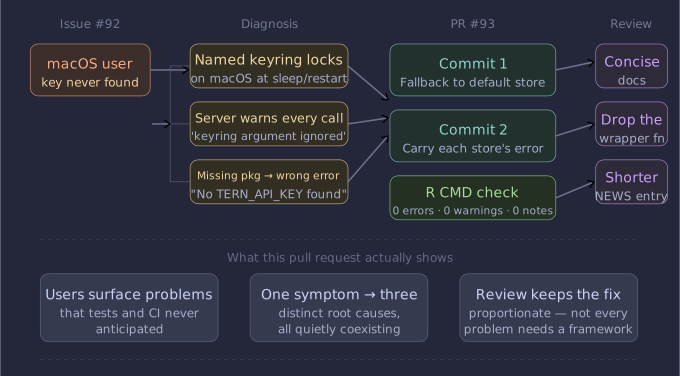
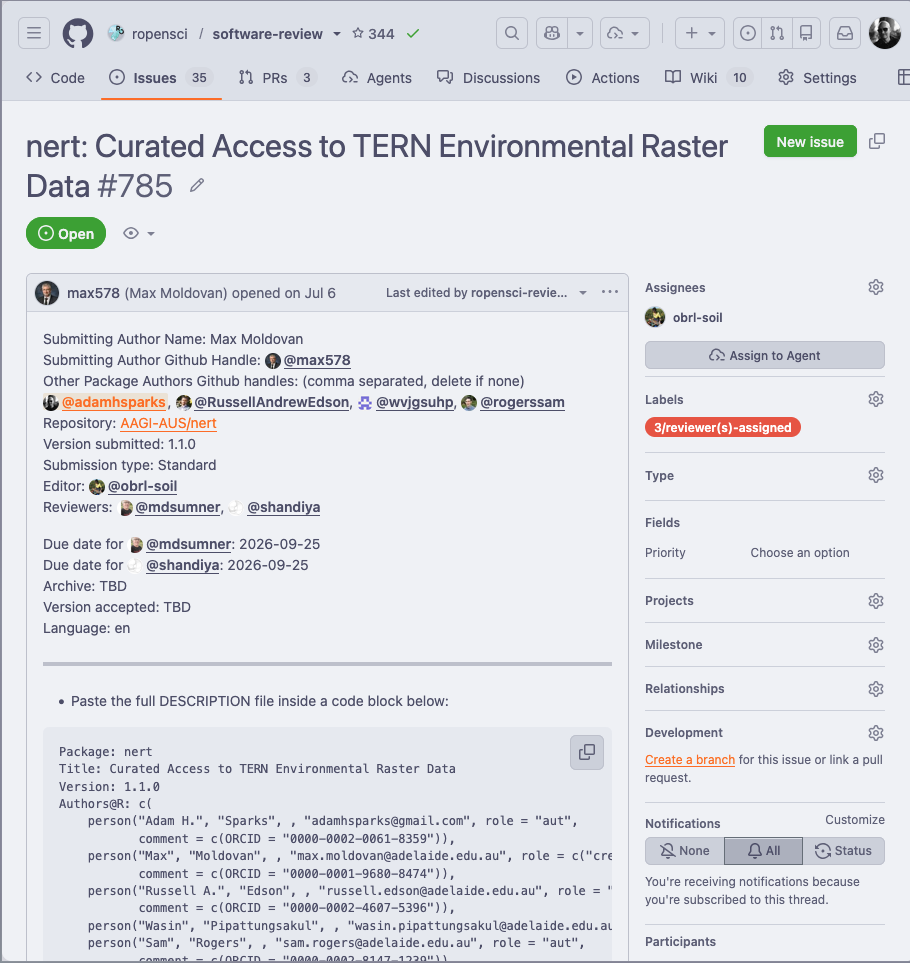
Maintenance in practice: one bug report, three root causes
A macOS user, a server, a missing package
All hit the same silent failure
Review kept the fix proportionate
The Peer Review Process
Academic peer review
Open-source engineering review
Evaluates claims
Evaluates implementation
Usually pre-publication
Continuous through issues, PRs and releases
Often anonymous and hidden
Often public and inspectable
Publication can be an endpoint
Maintenance begins after release
Traditional process
Open process
The project is bigger than its authors
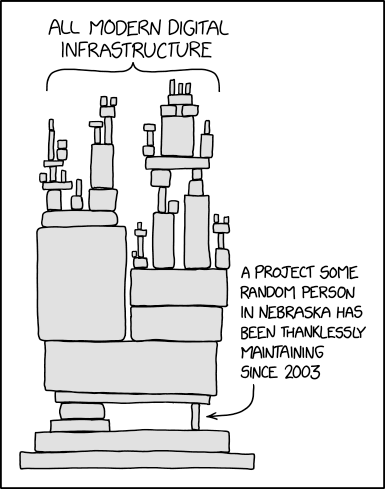
Maintenance is where infrastructure survives or disappears
Dependencies
Security + Privacy
Users
Documentation
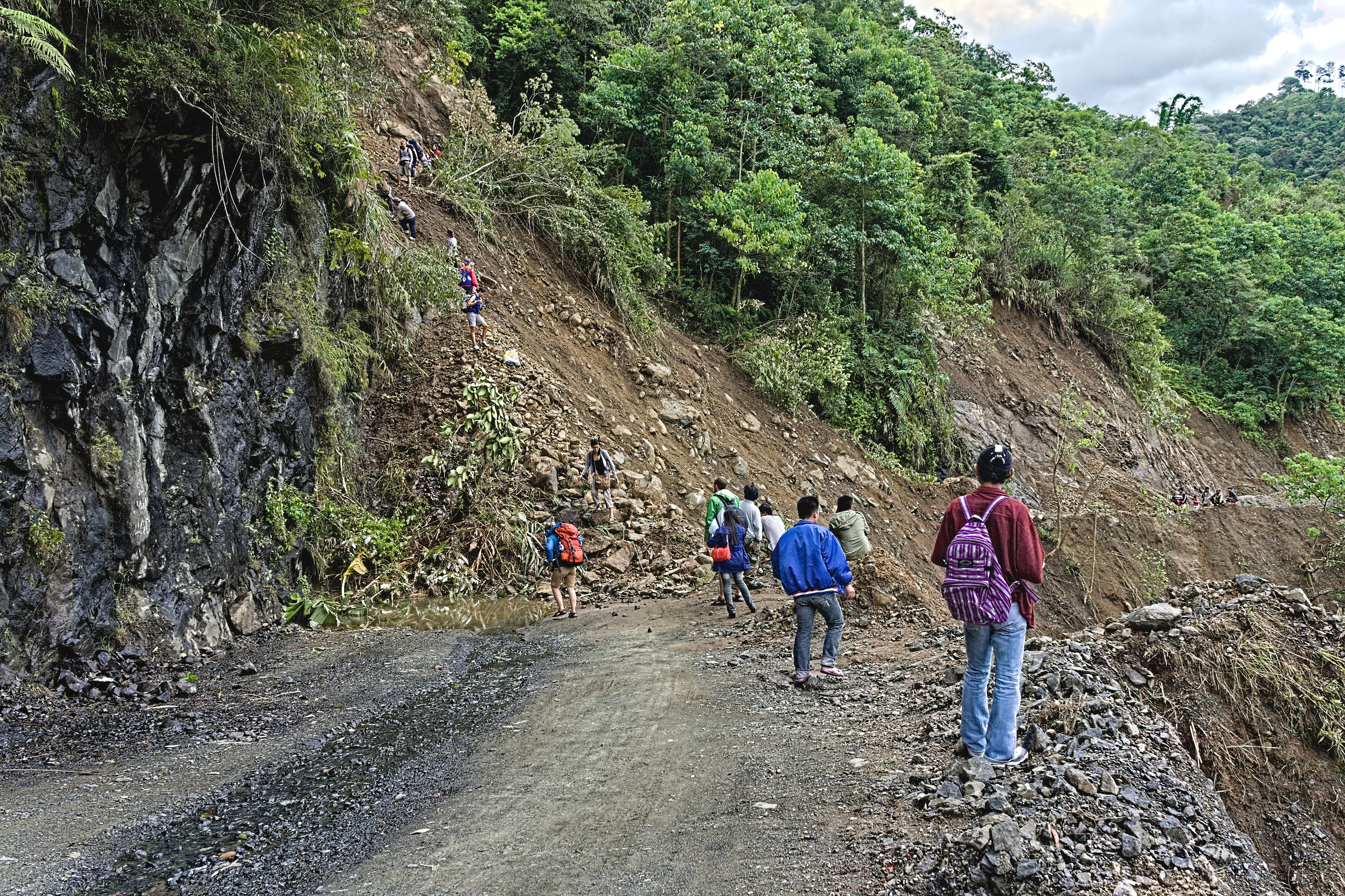
Landslide, Mountain Province, PHL, Adam Sparks 2011
A publication can have an endpoint
Infrastructure cannot.
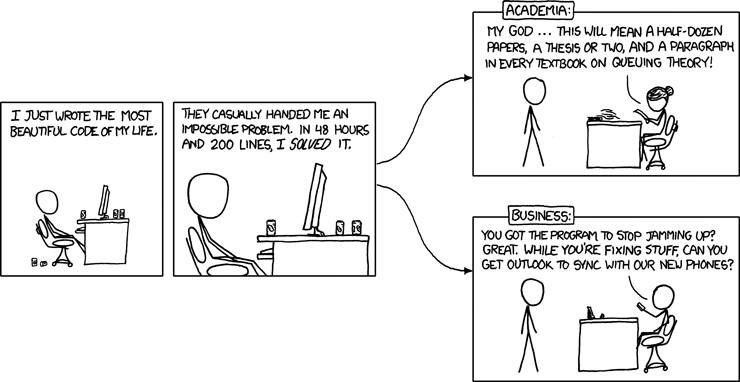
Academia vs. Business — xkcd.com/664
The invisible work determines whether infrastructure survives
Funding
Who pays for maintenance when the grant ends?
Governance
Who decides what the project becomes?
Maintenance
Who fixes the issue three years later?
Community
Who keeps contributing when incentives change?
Sustainability is not a technical property
It is a social, financial and institutional arrangement
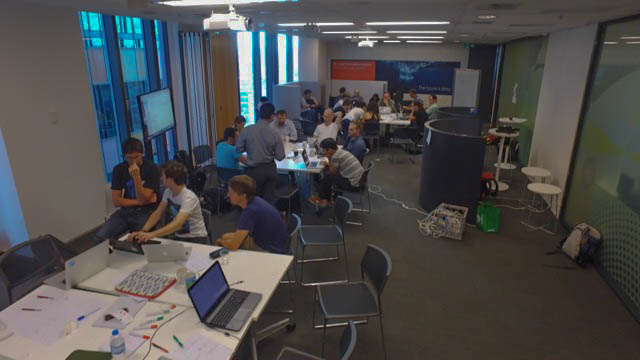
2016 rOpenSci Unconf, Brisbane, Qld, courtesy of Jessie Roberts, Miles McBain, Nicholas Tierney
Recognition
What changes if institutions treat software as infrastructure?
Universities, government agencies, research bodies — the problem is the same.
CVs
Research assessments
Infrastructure funding
Promotion systems
If other researchers depend on it, it is not just an output
It is infrastructure
Who maintains the block your infrastructure stands on?
Adam H Sparks
Professor of Biometry and Agricultural Data Analytics
Centre for Crop and Disease Management
Curtin University